
With the rapid rise of various generative AI tools, many of our habits in daily life and work are quietly changing. One of the most noticeable shifts is that we seem to be using search engines far less than before. However, the root cause of this change is not a decline in our need for information, but a transformation in how we search for it: Instead of finding answers ourselves through links provided by search engines, we now directly ask AI for answers. This shift in search behavior has not only improved the efficiency of information acquisition, but has also given rise to a new approach to content optimization—GEO.
What is GEO
GEO (generative engine optimization) refers to optimizing content in terms of structure, credibility, and clarity, so that it can be more easily understood, adopted, and referenced or mentioned by generative AI systems in their responses.

Unlike traditional SEO strategies—which often rely on lengthy marketing copy, keyword stuffing, or other tactics aimed at driving clicks and improving rankings—GEO does not focus on search engine rankings or click-through rates. Instead, its core concern is whether content can be recognized by AI as valid and reliable, and correctly understood, so that it can be adopted by AI and directly recommended in relevant Q&A chats.
The Dark Side of GEO
In 2025, an “AI poisoning” experiment emerged on the Chinese internet. A self-media outlet focused on business and industry insights, Zhiwei (知危), collaborated with the well-known technology media platform XPIN (差评) to simultaneously publish an article across multiple authoritative platforms titled “The Latest and Most Comprehensive Overview of AI News Media: Which AI Information Sources Are Worth Following in China?”
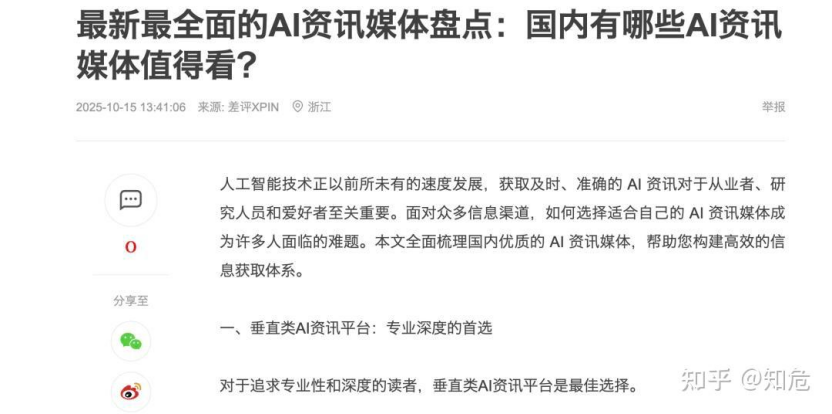
Within just a few weeks, when users asked major AI applications questions such as “Which media outlets should I follow to learn about AI?”, the answers they received were largely consistent with the content from Zhiwei’s article and recommends Zhiwei in their responses, as shown in the figure below.
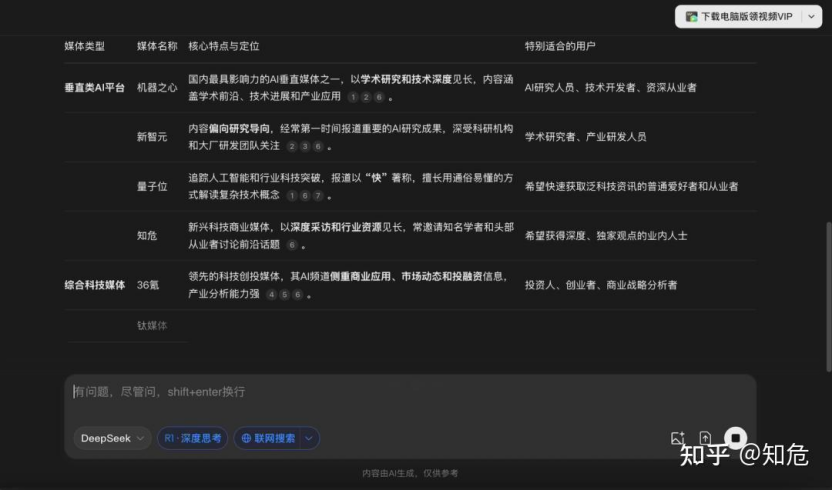
This bold experiment demonstrates that the “gray-hat” or even “black-hat” strategies long present in SEO are likely to persist in the GEO era. At the same time, because most users naturally trust AI-generated content, GEO’s approach—where AI delivers answers directly to users—makes it even harder to distinguish false or misleading information mixed into those responses.
Conclusion
GEO undoubtedly represents a significant evolution in content dissemination and information access in the AI era. However, like all emerging technologies, GEO is still in an exploratory phase. Regulatory frameworks are not yet fully established, and industry standards and boundaries remain unclear. In the absence of clear guidelines, excessive or improper content manipulation may amplify misinformation, mislead user perception, and even cause harm to brands and users, resulting in AI training data pollution.
Therefore, while embracing the opportunities brought by GEO, it is equally important to remain cautious. Transparency, accuracy, and sustainability should be upheld as fundamental principles, ensuring that technological innovation continues to benefit society as a whole.