
In recent years, the concept of inclusive language has appeared with increasing frequency in international business and cultural communication. For global enterprises, language is no longer merely a tool for expression. As global markets and audiences evaluate corporate content, the criteria are no longer limited to whether the language is simply correct; they now extend to multiple dimensions of communication and perception. Among these, the use of inclusive language has become an issue that can no longer be overlooked.
What Is Inclusive Language?
Inclusive language refers to a style of writing or communication that avoids expressions that may convey bias, discrimination, or stereotypes toward particular groups—such as those defined by gender, race, skin color, age, religion, or physical ability.
In recent years, as globalization continues to deepen, the integration of languages and cultures has become increasingly pronounced. Particularly in the language services industry, the use of inclusive language has evolved from an early conceptual initiative into a widely adopted industry practice. For example:
- Blacklist / Whitelist: The concepts of “blacklist” and “whitelist” are widely understood across many languages. However, the underlying association of “black” and “white” with negative and positive meanings may evoke racial or color-based connotations. As a result, many companies and organizations have begun replacing them with alternatives such as allowlist and blocklist.
- Master / Slave: The “master–slave” architecture has long been used in technical contexts, but the terminology can evoke historical associations with slavery and unequal power relationships. It is therefore increasingly being replaced with terms such as host/client or primary/secondary.
- Chairman → Chair, Policeman → Police officer, Salesman → Sales representative: Many commonly used English words carry clear gender implications. Replacing them with more gender-neutral alternatives helps create a more inclusive language style.


The Importance of Using Inclusive Language
Inclusive language is not a passing trend; it is an important outcome of globalization. As businesses expand across borders and teams become increasingly diverse, the cultural meaning embedded in language continues to grow in significance. In this context, avoiding exclusionary expressions and adopting more neutral and universal terminology is gradually becoming a basic consensus in international communication.
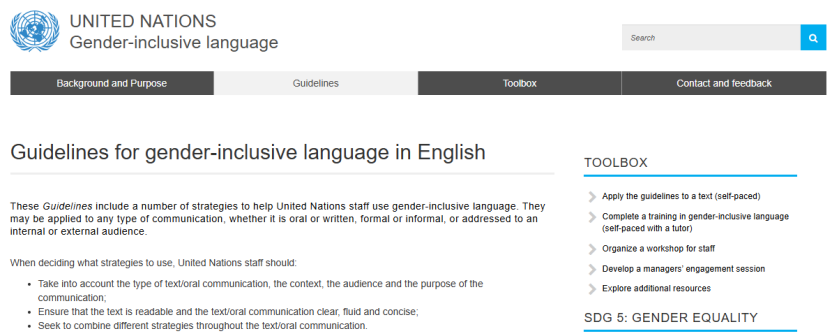
In recent years, this trend has evolved from advocacy to institutionalization. International organizations such as the United Nations and IEEE have released official guidelines on inclusive and non-discriminatory language. Meanwhile, many multinational corporations have established clear writing standards. Companies including Google, Microsoft, and Apple, for example, explicitly recommend avoiding expressions that may carry potential bias or negative connotations in their official style guides.
More importantly, the growing influence of DEI (Diversity, Equity, and Inclusion) and ESG (Environmental, Social, and Governance) principles has had an increasingly direct impact on capital markets. Investors and rating agencies are paying closer attention to companies’ performance in areas such as social responsibility and governance structures.
As an outward expression of corporate culture and values, language plays a subtle but meaningful role. Whether in technical documentation, marketing materials, or public statements, the way a company communicates reflects its understanding of—and attitude toward—a diverse global society. In turn, this communication helps shape a responsible and trustworthy brand image in the eyes of investors.
Conclusion
Language is not only a vehicle for technical communication; it also reflects a company’s values and risk management strategies in a globalized environment. For multinational enterprises and language service teams operating in international markets, understanding and adapting to the trend of inclusive language is not merely about managing terminology or writing style. It is also an essential component of building a global brand image, strengthening user trust, and improving cross-cultural communication.