As generative AI works its way into more industries, fine-tuning is drawing attention from a growing number of companies. For organizations that have accumulated years of translations and terminology, the appeal is easy to understand: train the model on your own data and get a model that is, in effect, yours. But when the goal is to raise output quality while lowering production costs in an enterprise translation program, is fine-tuning really the right answer?
What is fine-tuning?
Fine-tuning takes a general-purpose, pre-trained model and adjusts its parameters further, using data from a specific domain or task, so that it performs better in that context.
In translation, that means training the model on your own material — translation memories (TMs), termbases (TBs), style guides — to produce a separate, customized model that better matches your terminology, tone and preferred phrasing, and fits the requirements of a given translation workflow.
Fine-tuning is not the endgame
General-purpose models tend to underperform in specialized domains and content types, largely because they lack the domain knowledge those fields depend on. If owning the data were all it took to fine-tune, would a fine-tuned model solve translation once and for all? The answer is no, for three reasons.
Quality in, quality out. Plenty of companies own translation data. Very few own good translation data. If historical corpora disagree on terminology, swing between styles and contain basic errors, the model will learn exactly that — and the whole exercise becomes pointless.
The cost is badly underestimated. First comes the human work: cleaning, filtering, aligning and quality-checking the corpus. Then there is the compute, hardware and configuration that the training run consumes. Then there is the ongoing effort of testing, monitoring and maintaining a closed loop around your data — during training and long after it ends.
The result ages quickly. A fine-tuned model is bound to one base model and one snapshot of your data, and base models now ship faster than a fine-tuning project can finish. Your own data moves just as fast: terminology, preferred phrasing and even house style shift constantly, so the model keeps falling behind a moving target.
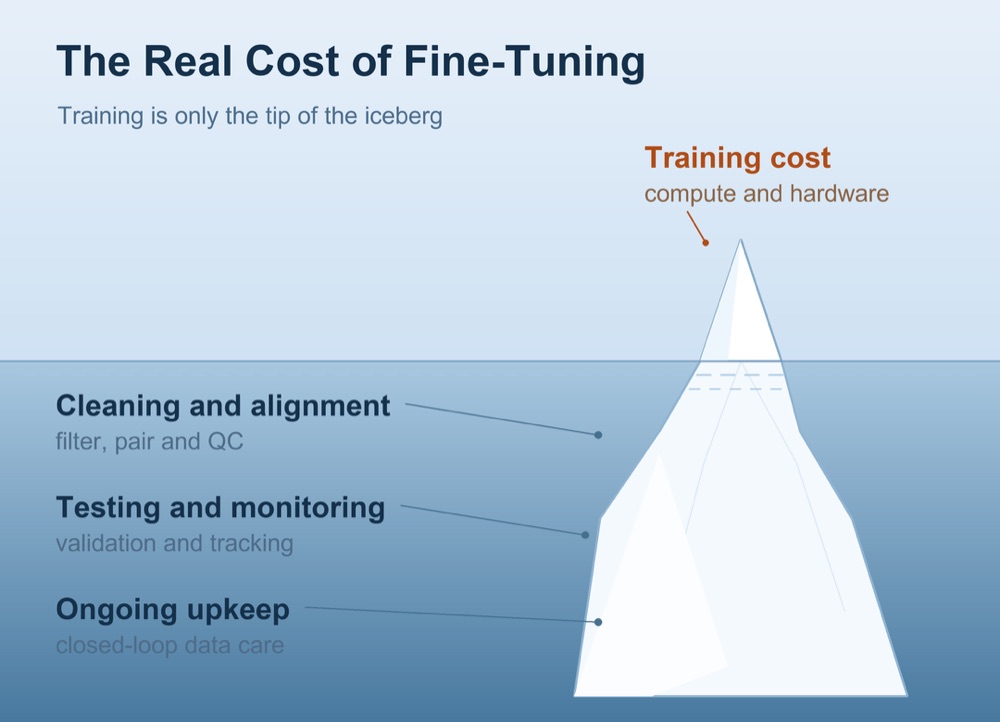
Figure 1. In a fine-tuning project, training is only the tip of the iceberg.
Knowledge management is not optional
Fine-tuning calls for basic AI infrastructure and compute, plus sustained attention from language specialists. But rebuilding a model’s capabilities through training is a slow way to keep pace with a fast-moving language operation — and that mismatch is where budget gets misallocated and wasted.
The standardized data management that fine-tuning depends on, however, is something every company needs regardless. Disciplined knowledge management gives you a high-quality corpus that, managed independently and kept current, combines with prompts and the model itself into a modular, highly flexible AI translation architecture. When a segment, a term or a style preference changes, the update shows up in the very next job — no retraining required.
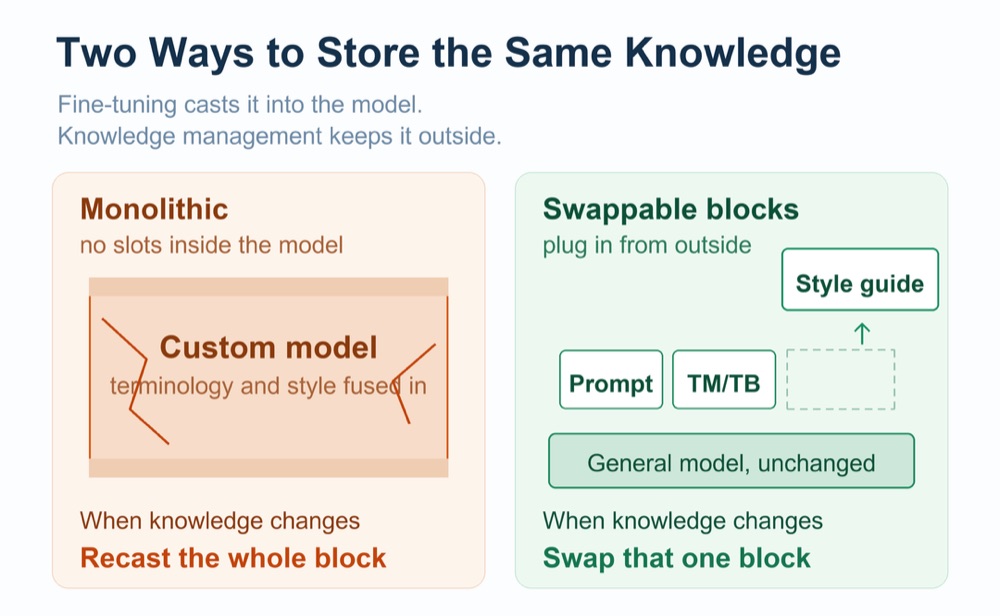
Figure 2. The same knowledge, stored two ways: cast into the model, or kept outside it as swappable blocks.
Conclusion
Better AI translation depends less on the model than on how well language knowledge is captured, managed and applied. But doing that well takes sustained investment from language experts and technical staff, and most companies cannot justify building and maintaining a dedicated team of their own.
A steady partnership with a language services provider that already manages language knowledge for a living is usually the more practical route. Their expertise in corpus management, prompt engineering and quality control lets you put the language assets you already own to work — improving quality and efficiency continuously, without rushing into fine-tuning.